Best Non-Toxic Toaster Ovens: Safer Countertop Picks
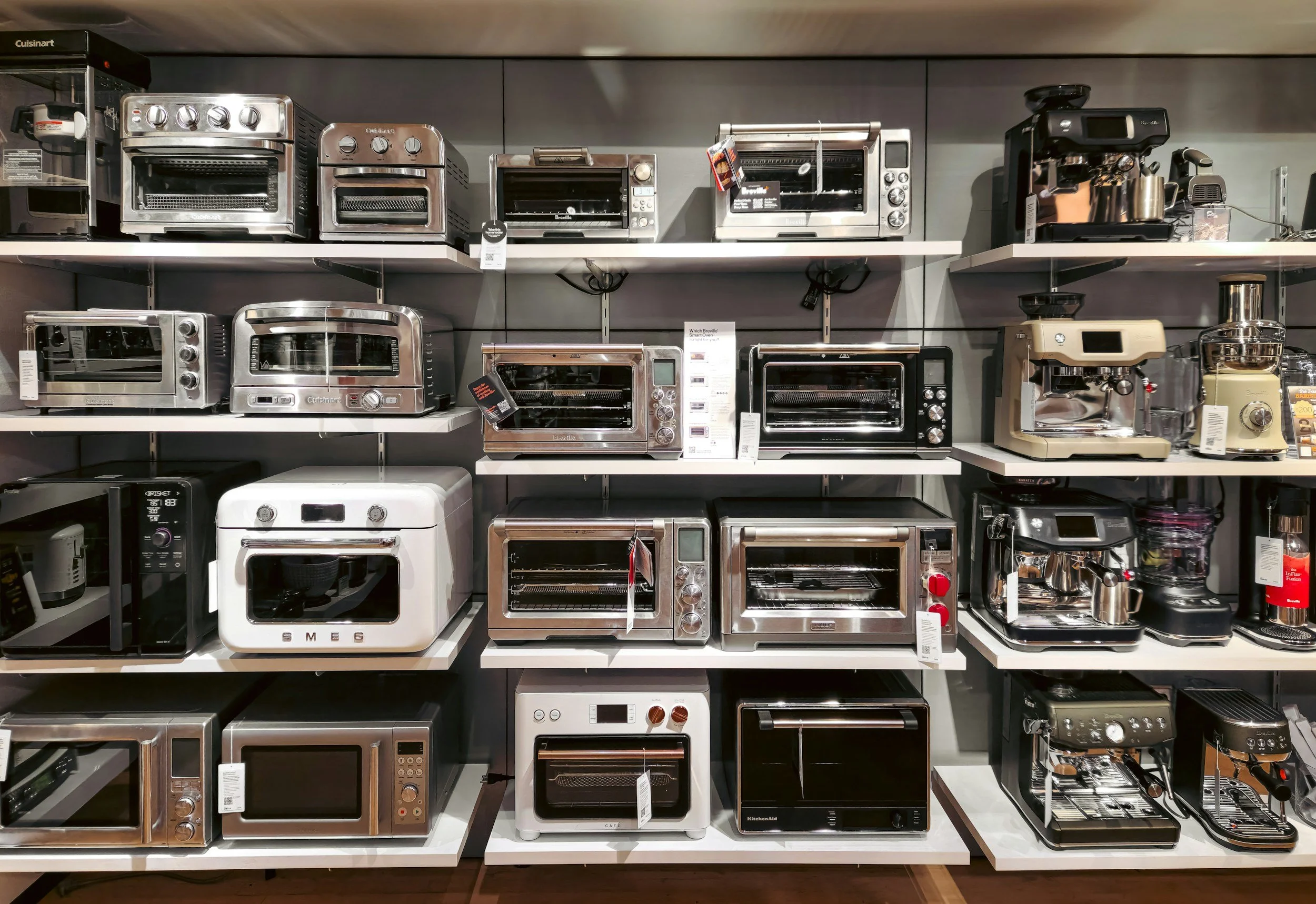
If you’re searching for the best non-toxic toaster oven, you’re probably trying to balance two things: the convenience of a countertop appliance while choosing materials you feel good about bringing into your kitchen.
When I started creating a lower-tox home, I focused first on the obvious swaps — cookware, food storage, and the products my family used every day. But one appliance that often gets overlooked is the toaster oven.
A toaster oven runs at high temperatures, often multiple times a week or even daily. Because food cooks in such close proximity to the interior surfaces, materials matter.
Choosing a non-toxic toaster oven doesn’t mean finding a completely perfect appliance (because those are hard to come by). Instead, it means understanding what materials are used, prioritizing stable surfaces, and choosing options that align with your family’s needs.
After researching materials, coatings, and safer kitchen appliances, these are the toaster ovens and countertop cooking options I feel are worth considering.
Choosing a non-toxic toaster oven is one small step — for more ways to create a calm, toxin-free home for your family, check out my guide to creating a lower-tox home environment for families.
Quick Comparison: Best Non-Toxic Toaster Ovens
| Toaster Oven | Best For | Key Materials | Why I Like It |
|---|---|---|---|
| Fritaire Glass Air Fryer | Best overall non-toxic option | Glass cooking chamber + stainless steel accessories | Avoids traditional non-stick coatings |
| GreenPan Countertop Oven | Ceramic coating option | PFAS-free ceramic coating | Good option for families wanting versatility |
| Our Place Wonder Oven Pro | Multi-function cooking | PFAS-free ceramic coating | Combines several appliances in one |
Best Non-Toxic Toaster Ovens
When shopping for a non toxic toaster oven, I always focus on stable materials first — stainless steel, glass, and transparent ceramic coatings — and then consider features I’ll actually use. Even the cleaner, higher-end models often come with coated baking trays or racks, so I recommend swapping them for stainless steel whenever possible.
Here are my top choices, along with tips for accessories:
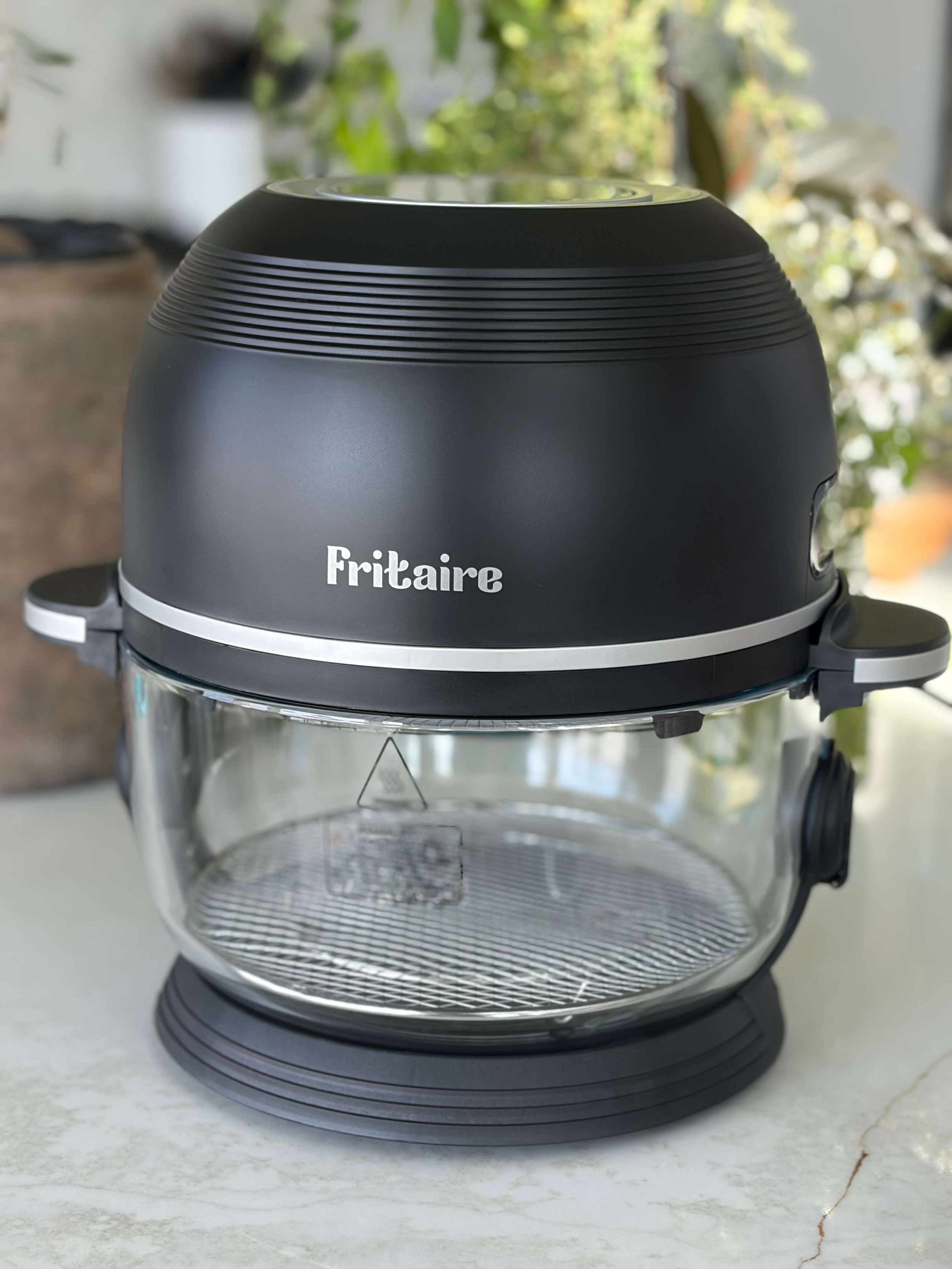
1. Fritaire Glass Air Fryer
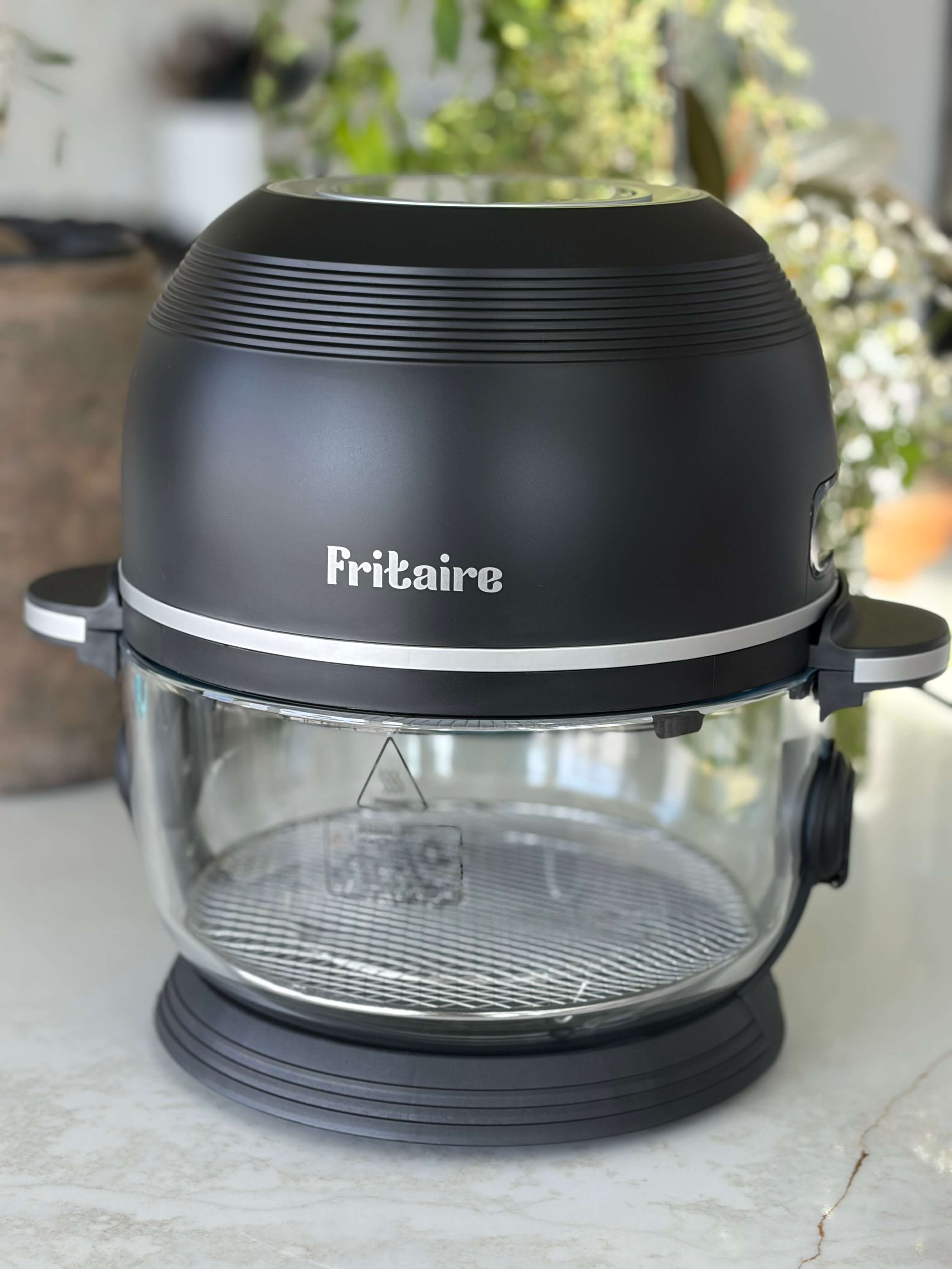
While the Fritaire is technically an air fryer rather than a traditional toaster oven, it is one of my favorite options for families looking for a countertop appliance with fewer coating concerns.
What makes it stand out is the glass cooking chamber. Unlike many traditional air fryers and toaster ovens that rely on coated baskets or trays, Fritaire uses a glass bowl and stainless steel accessories that allow food to cook without direct contact with a traditional non-stick surface.
Features I love:
Glass cooking chamber for a non-reactive cooking surface
Stainless steel accessories
BPA, Teflon, and PFAS-free design
Air fry, bake, roast, broil, reheat, and dehydrate functions
Dishwasher-safe stainless steel components
Family-friendly size for everyday cooking
This is the option I personally feel most comfortable recommending because it prioritizes stable materials while still offering the convenience most families want from a countertop appliance.
If you’re looking for something that can replace a traditional toaster oven while also giving you air frying capabilities, this is a great option.
Things to consider:
It is not a traditional toaster oven
Premium pricing
2. GreenPan Countertop Convection Oven & Air Fryer
GreenPan is a familiar name in the low-tox cookware space, and their countertop oven brings their ceramic coating technology into a multi-function appliance.
This toaster oven includes:
PFOA and PFAS-free ceramic coating
Air frying capability
Convection cooking
Adjustable racks
Multiple cooking functions
For families who prefer a ceramic-coated option, this is one worth considering because the brand provides more transparency around its coating technology than many traditional non-stick appliances.
However, even when choosing a product marketed as “non-toxic,” I still pay attention to what food directly touches.
My personal preference is to replace coated baking trays whenever possible with uncoated stainless steel alternatives. This simple swap allows you to keep the convenience of the appliance while reducing direct contact with coated surfaces.
→ Shop GreenPan Toaster Oven on Amazon
3. Our Place Wonder Oven Pro
The Our Place Wonder Oven Pro is designed for families who want one appliance that can replace several countertop cooking tools.
It offers:
Air frying
Toasting
Baking
Roasting
Broiling
Reheating
Dehydrating
Proofing
The interior and accessories use a PFAS-free ceramic coating, making it a more appealing option for families who want to avoid traditional non-stick finishes.
Like many ceramic-coated appliances, the main consideration is durability over time. Ceramic coatings can vary by brand and may wear differently depending on use and care.
For this reason, I recommend focusing not only on the coating claims but also on how the appliance is used and maintained.
An accessory upgrade, such as switching to stainless steel baking sheets when possible, can be an easy way to make your kitchen setup better aligned with your low-tox goals.
→ Shop Our Place Wonder Oven Pro on Amazon
Are Toaster Ovens Toxic?
Toaster ovens are not automatically toxic, but the materials used inside the appliance can be worth considering — especially for something that heats food at high temperatures on a regular basis.
Most toaster ovens sold today meet safety standards set by regulatory agencies. These standards are based on research that evaluates exposure levels considered acceptable for the general population.
For many families, that level of safety is reassuring.
However, if you are intentionally creating a lower-tox home, your goal may be different. Instead of only asking, “Is this technically safe?” you may also be asking:
“What materials am I choosing to bring into my home every day?”
When it comes to frequently used kitchen appliances, small choices can add up. Choosing stable materials, avoiding unnecessary coatings, and selecting brands that are transparent about their materials can help reduce exposure to things you may prefer to limit.
The goal is not perfection. It is making thoughtful choices where they make sense for your family.
Why Materials Matter in a Toaster Oven
Toaster ovens operate in a small, enclosed space with high temperatures and direct food contact.
Heating elements sit close to your food. Convection settings circulate hot air quickly. Interior surfaces and accessories are repeatedly exposed to heat, cooling, and reheating.
Over time, repeated heating can affect certain materials — especially coatings that experience regular wear.
This is why I focus less on marketing terms like “clean” or “eco-friendly” and more on the actual materials:
What is the interior made from?
What does food touch during cooking?
Are trays and racks coated?
Does the brand clearly disclose its materials?
A well-designed toaster oven should prioritize durable, stable surfaces that can withstand regular use.
If you’re curious about the science behind how heat affects cookware over time, this study on thermal degradation is a great resource to learn more.
What Makes a Toaster Oven Non-Toxic?
The term “non-toxic” is not regulated, which means it can mean different things depending on the brand.
When I evaluate kitchen appliances, I look for transparency first. A company that clearly explains its materials, coatings, and manufacturing process gives me more confidence than one that simply uses vague claims.
For a lower-tox toaster oven, I prioritize:
Stainless steel interiors
Glass cooking chambers or food-contact surfaces
Uncoated stainless steel trays and racks
Clear disclosure of coatings and finishes
PFAS-free claims when ceramic coatings are used
No appliance is completely free from trade-offs, but choosing more stable materials is a practical step toward creating a kitchen that feels intentional and thoughtfully designed.
And if you’re thinking beyond appliances, you can also explore my guide to the best non-toxic dinnerware options made in the USA to make sure every surface your food touches supports a lower-tox home.
The Best Materials for a Non-Toxic Toaster Oven
Stainless Steel Interior
Stainless steel is one of the materials I prioritize most in a high-use kitchen appliance.
Benefits include:
Durable under high temperatures
Resistant to corrosion
Does not rely on a non-stick coating
Long-lasting and easy to maintain
When shopping, look for stainless steel interior walls, racks, and food-contact components whenever possible.
Glass Cooking Chambers
Glass is another excellent option because it is non-reactive and heat resistant.
Benefits include:
No coating concerns
Easy visibility while cooking
Simple cleaning
Stable at cooking temperatures
This is one reason glass-based countertop appliances, like the Fritaire, stand out for families wanting to minimize direct contact with coated surfaces.
Ceramic Coatings
Ceramic coatings are often marketed as a safer alternative to traditional non-stick finishes.
When considering a ceramic-coated appliance, look for:
Clear PFAS-free labeling
Brand transparency
Information about the coating process
Ceramic coatings can be convenient, but they are still a coated surface. Their durability depends on the specific product, how often it is used, and how it is maintained.
For frequent cooking, I personally prefer reducing direct food contact with coatings whenever possible by choosing stainless steel accessories.
What To Avoid (or Research More Closely)
When shopping for a non-toxic toaster oven, I pay close attention to materials that are unclear, heavily coated, or not fully disclosed.
These options are not automatically unsafe, but they deserve more research.
⚠️ Traditional Non-Stick Coatings
Many conventional toaster ovens use non-stick finishes on trays, baskets, or interior surfaces.
When researching an appliance, look for information about:
PTFE coatings
PFAS-containing finishes
Unspecified non-stick materials
If a company does not clearly disclose what a coating is made from, that lack of transparency is something I consider when making a decision.
⚠️ Unclear “Easy-Clean” Surfaces
Marketing terms like:
Easy-clean coating
Ceramic-style coating
Eco coating
do not always tell you what material is actually being used.
A transparent brand should be able to explain what its surfaces are made from.
⚠️ Coated Accessories
One of the easiest things to overlook is the accessories.
Even appliances marketed as “non-toxic” may include:
Coated baking trays
Non-stick air fry baskets
Coated racks
For this reason, swapping accessories for stainless steel alternatives can be one of the simplest upgrades you can make.
Truly “perfect” kitchen appliances are hard to find, and even products marketed as non-toxic can have trade-offs — as discussed in this recent piece on ceramic cookware and safety claims from The Guardian — which is why choosing safer materials where you can and swapping out coated trays or racks is a practical, realistic approach.
⚠️ Proposition 65 Warnings
Some appliances carry California Proposition 65 warnings.
A warning does not automatically mean a product is unsafe, as these warnings can apply to many different materials and exposure scenarios.
However, if a company provides a warning without explaining the reason or materials involved, I consider that a sign to research further.
Transparency matters more than marketing.
If you want to dive deeper into how PFAS and other chemicals in non-stick cookware can impact health, check out this guide to PFAS in everyday products.
Don’t Overlook Toaster Oven Accessories
When choosing a non-toxic toaster oven, it’s easy to focus only on the appliance itself.
But the accessories matter just as much.
Many countertop ovens include baking trays, air fry baskets, or racks that may have coated surfaces. Even if the appliance itself has thoughtful material choices, these accessories are often the surfaces your food touches most directly.
One of the simplest upgrades you can make is replacing coated accessories with stable, uncoated options.
I prefer using:
These small swaps can help create a kitchen setup that feels more intentional without requiring you to replace an entire appliance.
Sometimes the appliance is not the biggest concern — it’s the surface your food sits on while cooking.
To complete your low-tox kitchen setup, check out my guide to the 5 best non-toxic measuring cups and spoons that are lead-free and safe for daily use.
Features Matter Less Than Materials
Modern toaster ovens and air fryer ovens come with endless features:
Air frying
Steam cooking
Convection settings
Multiple cooking presets
Dehydrating
Smart controls
These features can be convenient, but they do not determine whether an appliance is a better choice for a lower-tox kitchen.
The most important questions to ask are:
What materials does my food touch?
How durable are those materials under regular heat?
Does the brand clearly disclose its coatings and finishes?
When shopping, I recommend prioritizing materials first and features second.
A simpler appliance made with stable materials is often a better choice than a feature-packed appliance with unclear coatings.

A Practical Shopping Checklist for Non-Toxic Toaster Ovens
When evaluating a toaster oven, use this simple checklist:
Prioritize Stable Materials
Look for:
☐ Stainless steel interiors
☐ Glass cooking chambers
☐ Uncoated stainless steel trays and racks
☐ Clear information about food-contact surfaces
Research Coatings
If an appliance uses a coating:
☐ Look for PFAS-free claims
☐ Check whether the brand explains its coating technology
☐ Avoid vague terms like “eco coating” or “ceramic-style” without details
For more on how to spot misleading claims and avoid greenwashing, check out Greenwashing 101: How to Spot It and Avoid Being Misled.
Consider Accessories
Remember:
☐ Included trays may be coated
☐ Racks may use different materials than the interior
☐ Accessories can often be replaced with stainless steel alternatives
Choose Features Intentionally
Consider:
☐ Which functions you will actually use
☐ Whether the appliance fits your cooking habits
☐ Whether additional features add value or just complexity
The best toaster oven is the one that combines materials you feel comfortable with and features your family will actually use.
Frequently Asked Questions About Non-Toxic Toaster Ovens
What is the safest material for a toaster oven?
Stainless steel interiors, uncoated stainless steel accessories, and glass cooking chambers are some of the most stable materials to look for in a toaster oven. These materials are durable, heat resistant, and do not rely on traditional non-stick coatings.
Are ceramic toaster ovens safe?
Ceramic-coated toaster ovens can be a better option than traditional non-stick appliances when they are clearly labeled PFAS-free and the brand is transparent about its materials. However, ceramic coatings can vary in durability, so choosing a product with strong material disclosures is important.
Do toaster ovens contain PFAS?
PFAS concerns are typically associated with certain non-stick coatings rather than the heating process itself. If avoiding PFAS is a priority, look for appliances that clearly disclose their coatings and consider choosing glass or uncoated stainless steel cooking surfaces when possible.
Do air fryer toaster ovens release toxic fumes?
Modern appliances are designed to meet safety standards when used according to manufacturer instructions. Concerns are generally related to damaged or overheated coatings rather than normal operation. Choosing stainless steel or glass accessories can help reduce reliance on coated surfaces.
What is the best non-toxic countertop oven?
The best option depends on your priorities. For families wanting to avoid traditional non-stick surfaces, glass and stainless steel options like the Fritaire stand out. If you prefer a traditional countertop oven with more functions, ceramic-coated options like GreenPan and Our Place may be worth considering.
How can I reduce chemical exposure from my toaster oven?
Simple steps include:
Choosing stainless steel or glass cooking surfaces
Replacing coated trays or racks with stainless steel alternatives
Avoiding scratched or damaged coatings
Selecting brands that clearly disclose their materials
You do not need to replace everything at once. Small, intentional upgrades can make a meaningful difference over time.
A Balanced Perspective on Non-Toxic Kitchen Appliances
It is easy to find information online that makes everyday products feel overwhelming. Headlines about chemicals, toxins, and health risks can quickly make simple choices feel complicated.
The reality is more nuanced.
Choosing a lower-tox kitchen is not about creating a perfectly chemical-free environment. It is about understanding your options, reducing unnecessary exposures where practical, and making choices that align with your family's values.
For many families, starting with high-use items is the easiest place to begin.
A toaster oven is used frequently, exposed to high temperatures, and comes into contact with food — making it a reasonable place to prioritize durable, thoughtfully chosen materials.
Final Thoughts
Choosing the best non-toxic toaster oven does not have to mean finding a perfect appliance.
Instead, focus on:
Stable materials like stainless steel and glass
Transparent brands that disclose their coatings
Durable accessories that minimize unnecessary contact with coated surfaces
Features that fit your family’s actual needs
The goal is not perfection.
It is creating a kitchen that feels intentional, practical, and aligned with the way you want to care for your family.
Small changes — like choosing a better countertop appliance or swapping a coated tray for stainless steel — can quietly support a lower-tox home over time.
If upgrading your kitchen feels like a big task, you might enjoy my step-by-step tips on how to transition to a non-toxic home without feeling overwhelmed.
Latest on the blog