Choosing diapers is one of those small everyday decisions that quietly adds up during the first years of life.
If you think about it, babies spend nearly all day and night in a diaper. That diaper sits directly against their skin through countless diaper changes in the first couple of years.
For many parents, that naturally raises a question:
What exactly is in the diapers we use every day?
If you’ve been wondering the same thing, you’re not alone. Many families today are looking for non-toxic disposable diapers made with safer materials and fewer questionable ingredients.
In this guide, I’m sharing the best non toxic diapers I’ve tested after researching diaper materials, ingredient lists, and brands that prioritize transparency. I’ll also walk through what actually matters when choosing a diaper, because the diaper industry can feel surprisingly confusing.
And of course, I’ll share the brands I personally trust most.
Why Many Parents Are Looking for Non Toxic Diapers
Traditional disposable diapers were designed primarily for absorbency and convenience. And while many major brands do that well, they often rely on materials that some parents (myself included) prefer to avoid.
Some conventional diapers may contain:
Fragrances
Lotions or dyes
Optical brighteners
Chlorine-based bleaching
Petroleum-derived plastics
Trace levels of volatile organic compounds (VOCs)
Even when these substances are present in small amounts, babies wear diapers day and night, meaning the materials remain in close contact with their skin for long periods of time.
For many parents, choosing diapers made with safer options like plant-based materials, organic cotton, and totally chlorine-free (TCF) pulp simply feels like a thoughtful way to reduce unnecessary exposure and support healthy development during those early years.
Ingredient Transparency When Choosing Non Toxic Diapers
One of the most important factors I look for in a non toxic diaper is full ingredient transparency. The brands I trust don’t just make claims — they openly share exactly what’s in the diaper and how it’s made.
Look for companies that clearly disclose:
Bleaching processes, ideally TCF (Totally Chlorine Free)
Certifications and safety evaluations that back up their claims (such as EWG verification or OEKO-TEX certification)
Use of synthetic fragrances or lotions — whether they are truly fragrance-free
Plastic or petroleum-based components in the diaper shell
Wetness indicators or extra features that could introduce chemicals
Transparency matters because when a diaper brand doesn’t share these details, it’s impossible to know what your baby’s skin is actually touching. For example, some diapers marketed as “clean” or “eco-friendly” still contain chlorine derivatives, dyes, or chemicals in the absorbent core that could be avoided entirely.
Some brands also use greenwashing tactics, making their diapers sound “non-toxic” or “natural” when they aren’t. When in doubt, always look for ingredient transparency and trusted certifications. For more tips on spotting misleading claims, check out my post: Greenwashing 101: How to Spot It and Avoid Being Misled
If after researching a diaper you still don’t understand exactly what’s in it, chances are the brand is not transparent (which is always a huge red flag in my book).
With these transparency guidelines in mind, it’s easier to see which brands really deliver — here are my top three non-toxic diaper picks.
3 Best Non Toxic Diapers for Babies and Toddlers
These are the diaper brands that consistently stand out for ingredient transparency, safer materials, and strong diaper performance.
I always look for a combination of:
Clean materials
Reliable absorbency
Trusted certifications
Here are the brands I trust, have personally tested and feel most comfortable recommending.
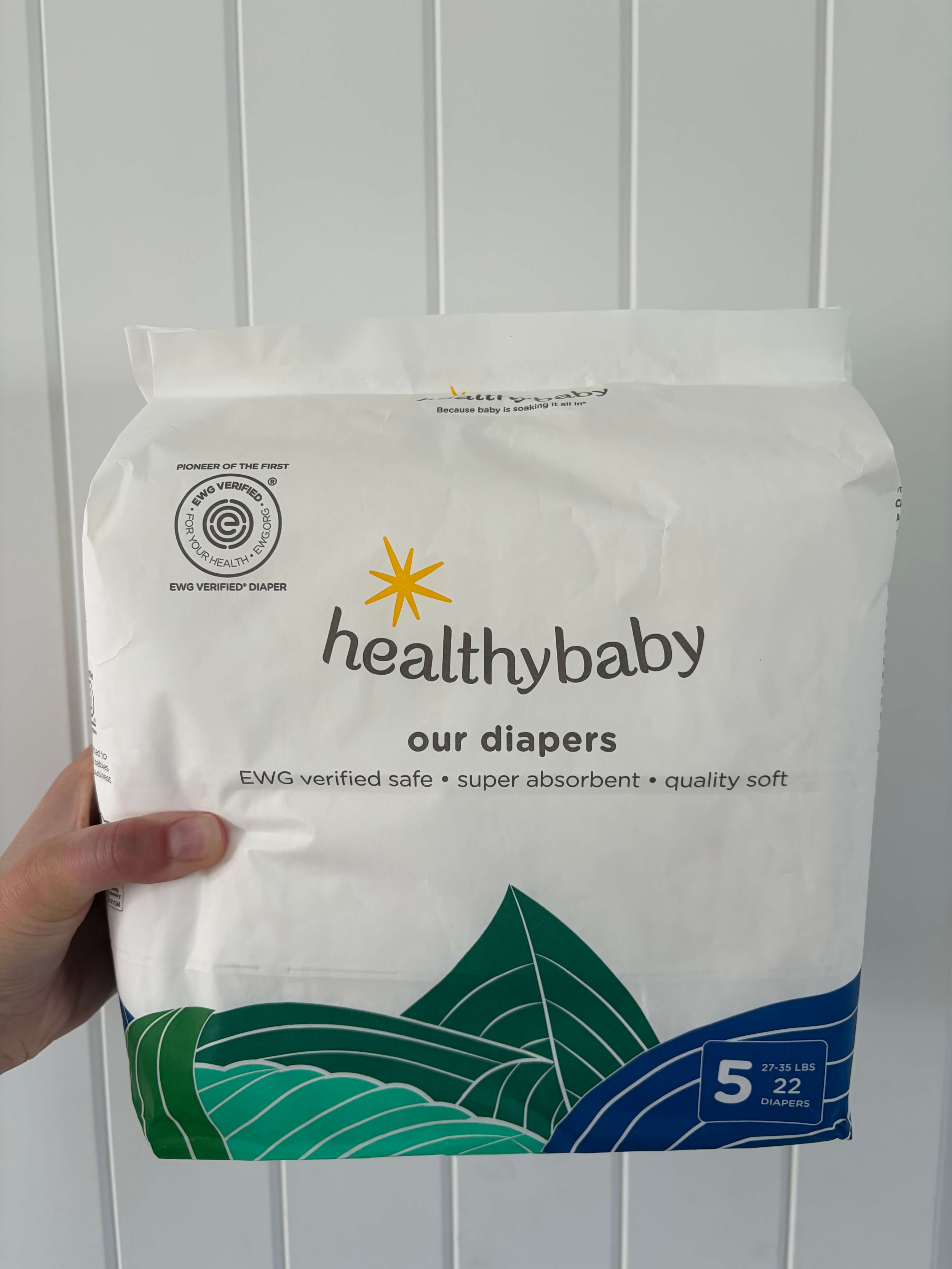
1. HealthyBaby Diapers
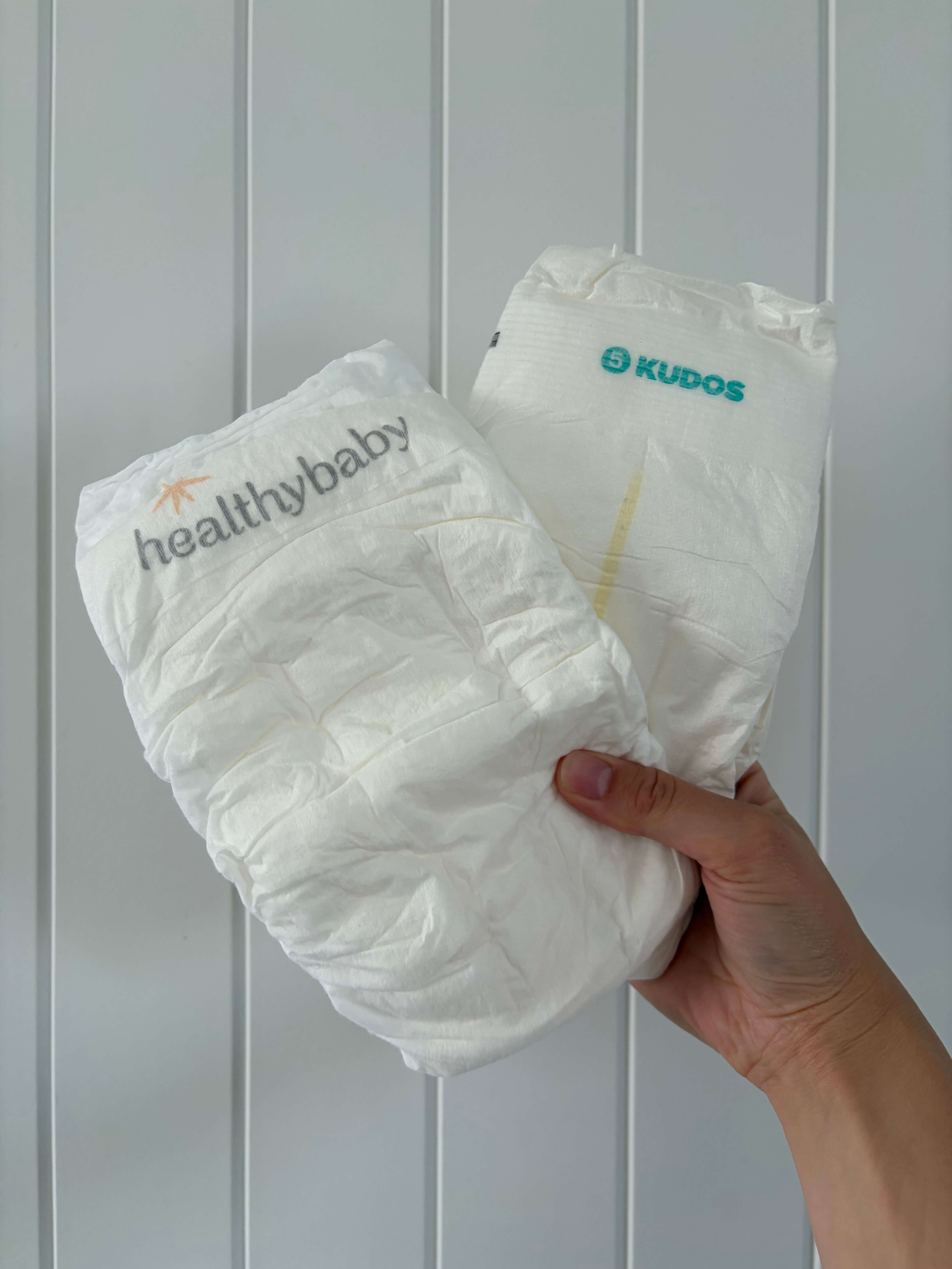
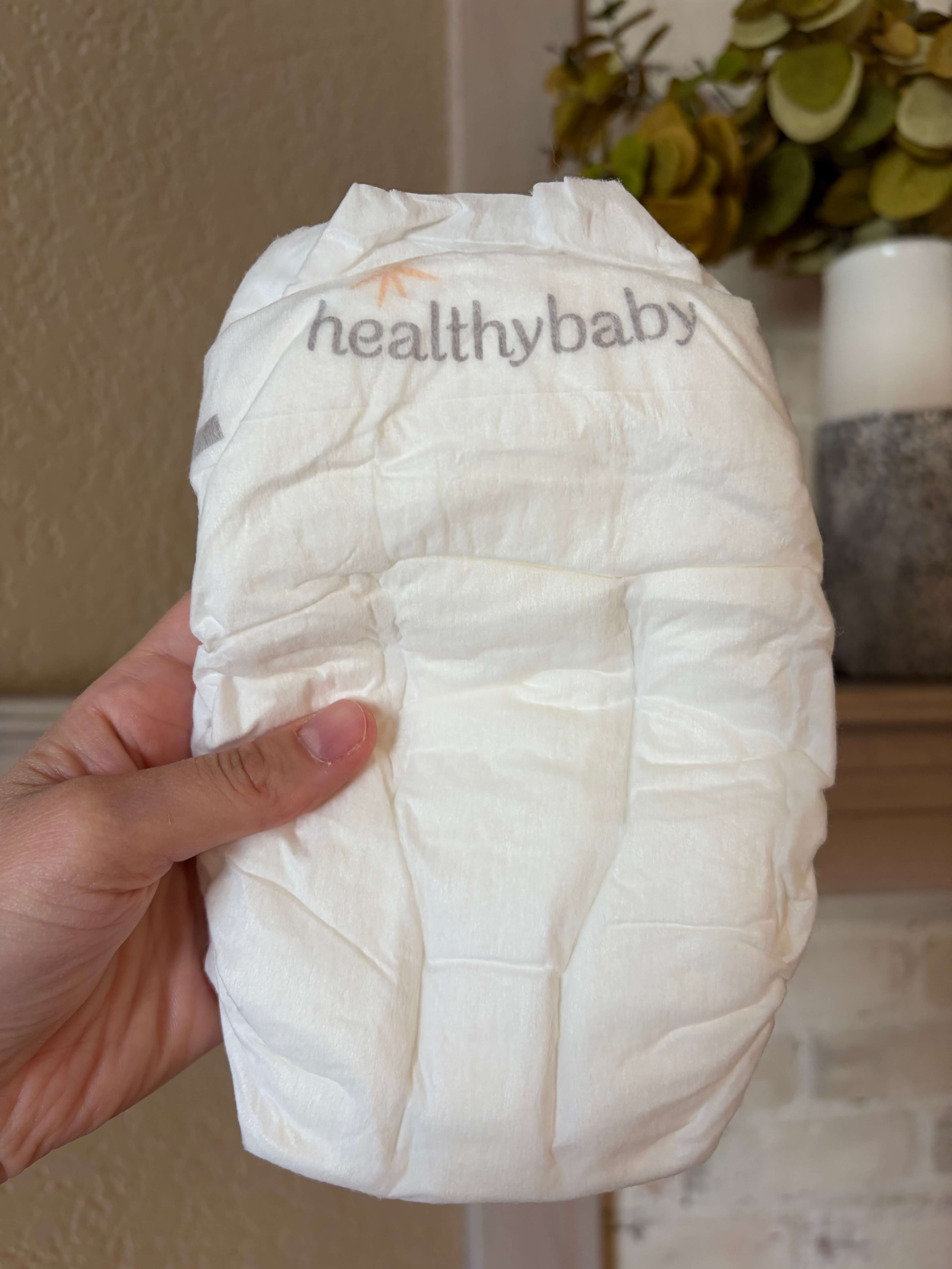
These are the diapers we personally use in our home and have used with both of our daughters, including our current 9-month-old.
And after trying them, they quickly became the primary diaper we use for our little ones.
What I Love
HealthyBaby diapers are EWG Verified, which is one of the most rigorous certifications in the baby product world.
That means they’ve been evaluated for potential toxic chemicals, heavy metals, and harmful ingredients.
They’re also made with:
Totally chlorine-free (TCF) pulp
Plant-based materials
Sustainably sourced wood pulp
No fragrance, dyes, or lotions
No wetness indictors
3,900+ other banned ingredients, making these diapers one of the safest options
For me personally, the EWG verification alone makes these diapers a top choice.
Real-World Performance
In terms of absorbency, these have been excellent for us.
The absorbent core holds a surprising amount, and we’ve had very few leaks even overnight.
They’re also incredibly soft — softer than any other diaper I’ve felt.
Why No Wetness Indicator?
HealthyBaby diapers do not include a wetness indicator.
Some parents prefer that feature, but honestly, it has never mattered to me.
I can usually tell a diaper is wet simply by:
Feeling the fullness
Looking at the shape
To me, skipping the wetness indicator actually feels like a simpler design with fewer extra materials (and chemicals).
And for our family, that tradeoff is completely worth it.
→ Shop HealthyBaby diapers here
Read my full HealthyBaby diaper review here: Our Diaper by HealthyBaby Review: Is It Worth It?
2. Kudos Diapers
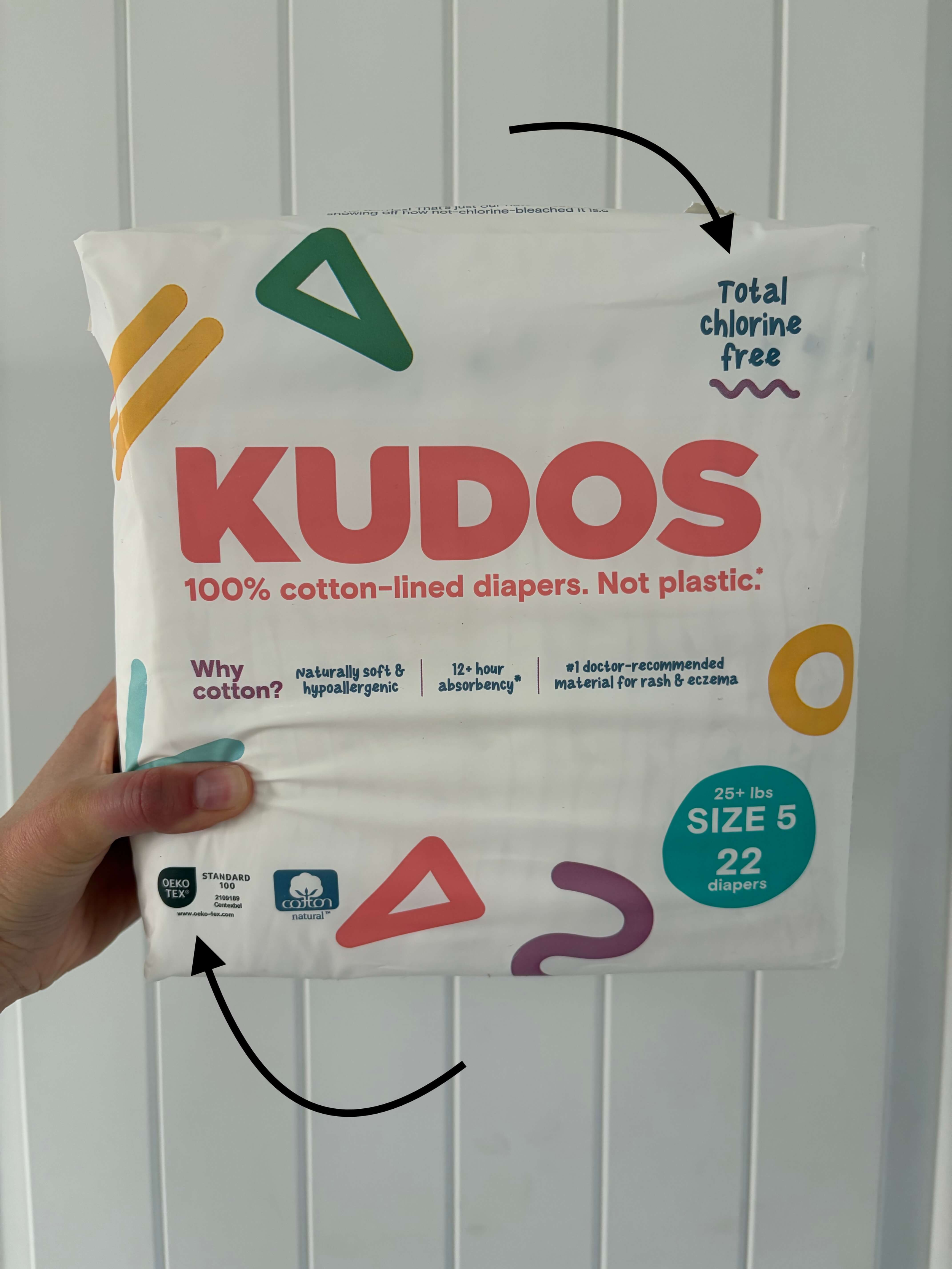
Kudos diapers are another brand that really stands out in the non-toxic diaper space — and after trying them firsthand, I’ve been genuinely impressed.
These diapers are incredibly absorbent, and blowouts are seriously not a thing with them. If you’ve ever dealt with the constant outfit changes that come with other diapers, you know what a big difference that makes. They’ve done an amazing job keeping everything contained while still feeling soft and breathable.
Kudos diapers do include a wetness indicator, so for parents looking for a non-toxic diaper who also appreciate having that visual cue, Kudos is an excellent option.
What Makes Them Unique
Kudos diapers are:
TCF (Totally Chlorine Free)
OEKO-TEX certified
Free from parabens, phthalates, latex, fragrances, and lotions
They also feature a 100% cotton liner, which is fairly rare in disposable diapers.
Most conventional diapers use plastic-based liners that sit directly against baby’s skin, so having a cotton layer instead is a really thoughtful design choice for parents looking for safer, more natural diaper materials.
My Honest Take
Overall, I’ve been extremely impressed with the absorbency, comfort, and thoughtful materials, and they’ve quickly become one of my favorite non-toxic diaper options.
3. Coterie Diapers
Coterie is a brand that has gained a lot of attention in recent years for its high-performance diapers.
We actually tried a pack that was gifted to us, which gave me a chance to see how they perform in real life.
What Stands Out
Coterie diapers are:
TCF (Totally Chlorine Free)
OEKO-TEX certified
Free from fragrances and dyes
The absorbent core is impressive, and they performed very well for overnight use.
I also liked the elastic waistband and leg fit, which helped prevent leaks.
My Honest Take
Coterie is another great option if you’re looking for a cleaner disposable diaper for your little one. These diapers are made with safer materials, carry a trusted certification and have reliable absorbency (check, check, check!). Another thing I appreciate about Coterie is that they’re relatively easy to find. You can often find them at Whole Foods grocery stores, which is really helpful when you are in a pinch!
What Makes a Diaper “Non Toxic”?
There’s no single universal definition of a non-toxic diaper. But the best non toxic diapers tend to share several key characteristics.
Safer Materials
Look for diapers made with:
Plant-based pulp
Organic cotton liners
Reduced petroleum-based plastics
Many brands now use plant-based plastic or plant-based fluff in the absorbent core to reduce chemical exposure and environmental impact.
Chlorine-Free Processing
The bleaching process used to whiten diaper pulp can vary.
You’ll often see these labels:
TCF diapers (Totally Chlorine Free)
No chlorine or chlorine derivatives used. This is the gold standard.ECF diapers (Elemental Chlorine Free)
No elemental chlorine, but chlorine dioxide may still be used.
No Added Fragrance or Lotions
Fragrance additives are a common cause of skin irritation and allergic reactions for sensitive babies.
Most non-toxic diaper brands skip:
Artificial fragrance
Dyes
Lotions
Latex
Phthalates
Certifications to Back Up Their Claims
The most trustworthy brands are simply clear about their materials and have certifications to prove their non-toxic claims:
These certifications don’t guarantee perfection, but they do indicate a higher level of ingredient transparency. I prefer to use diapers that carry at least one of these certifications.
Curious which certifications you can trust? Check out my post on Certifications That Actually Matter (and the Ones That Don’t)
Why TCF Matters (and Why ECF Isn’t the Same)
When you start digging into how disposable diapers are made, one detail that often gets overlooked is how the wood pulp inside the diaper is processed.
Most diapers contain wood pulp in the absorbent core. That pulp is naturally brown, so manufacturers typically bleach it to make the bright white material we’re used to seeing.
The bleaching method matters more than many people realize.
What TCF Means
TCF stands for Totally Chlorine Free.
With TCF diapers, the pulp is whitened without using chlorine or chlorine-based chemicals at all. Instead, manufacturers rely on processes that use oxygen, ozone, or hydrogen peroxide.
This matters because chlorine bleaching can create trace byproducts called dioxins. Dioxins are persistent environmental pollutants that can accumulate over time and have been studied for their potential health effects and environmental impact.
Modern manufacturing has reduced these risks significantly, but TCF eliminates chlorine from the process entirely, which is why many people consider it the gold standard for safer pulp processing.
What ECF Actually Means
You’ll also see many diaper brands labeled ECF, which stands for Elemental Chlorine Free.
At first glance, that can sound very similar to TCF — but it isn’t the same thing.
ECF diapers avoid elemental chlorine gas, which was historically the most concerning bleaching method. However, they still use a chlorine derivative called chlorine dioxide during the bleaching process.
This approach does reduce the amount of harmful byproducts compared to older chlorine methods, but it does not eliminate chlorine chemistry entirely.
Why Many Parents Prefer TCF
Because ECF still relies on a chlorine-based compound, it can still produce trace levels of dioxins and other waste products associated with chlorine bleaching.
Again, these levels are typically very low — but when you’re choosing products that sit against your baby’s skin for thousands of hours during the first years of life, I prefer the option that removes chlorine from the equation altogether.
That’s why TCF diapers tend to stand out among the most non-toxic diapers available.
They represent the most precautionary approach to pulp processing currently used in the diaper industry.
Quick Notes:
TCF: No chlorine used at all
ECF: Uses chlorine derivatives (chlorine dioxide)
ECF is certainly better than traditional chlorine bleaching, but it still isn’t the same as a fully chlorine-free process.
For families who want the cleanest possible diaper materials, TCF remains the most reassuring option available today.
Why Are Non Toxic Diapers More Expensive?
Cleaner materials and more responsible manufacturing usually means a higher cost per pack of diapers. Many non toxic brands try to help offset this with:
Subscription services
Discounts on bulk packs
That said, I know that not every family can absorb the extra cost. If budget is a concern, cloth diapers are a fantastic alternative. At first, cloth diapering can feel overwhelming — all the washing, folding, and storage may seem like a lot. But in practice, once you find a system that works for your family, it can be surprisingly easy, convenient, and practical.
Cloth diapers also save a ton of money over time and drastically reduce landfill waste, making them an eco-friendly choice as well. Many families combine cloth diapers at home with certified non toxic disposables for travel, which is a great option!
People Also Ask
Are non toxic diapers really better?
Yes — at least when you’re looking for diapers that meet verified safety standards. Non toxic diapers that carry EWG verification or OEKO-TEX certification are made with cleaner materials and avoid harmful chemicals, which matters a lot when you consider cumulative exposure.
Do non toxic diapers prevent diaper rash?
No diaper can completely prevent diaper rash, but the brands I recommend — TCF diapers without fragrances, lotions, or wetness indicators that are also made with natural fibers like organic cotton — tend to be gentler on skin.
Looking for an organic baby balm? Check out my favorite non-toxic alternatives to Aquaphor.
What diapers are totally chlorine free?
The gold standard is TCF (Totally Chlorine Free) pulp, which is processed without any chlorine or chlorine derivatives. This eliminates potential trace byproducts from the bleaching process. Both HealthyBaby, Kudos and Coterie are examples of diapers that meet this standard.
ECF diapers are a step up from conventional bleaching but still use chlorine derivatives, so TCF is the safer choice.
Final Thoughts
Finding the best non-toxic diapers doesn’t have to feel overwhelming.
There are more thoughtful brands available today than ever before, and many are prioritizing safer materials, transparency, and better environmental practices.
Many of the diapers on this list perform incredibly well in terms of absorbency, comfort, and cleaner ingredients, which makes it much easier for parents to find an option that aligns with their values.
Ultimately, the best diaper is simply the one that works well for your baby, your routine, and your priorities.
And if choosing a diaper made with cleaner materials gives you a little extra peace of mind during those many diaper changes, that’s a beautiful place to start.
Latest on the blog