Tencel vs Silk: Key Differences in Softness, Sustainability and Care
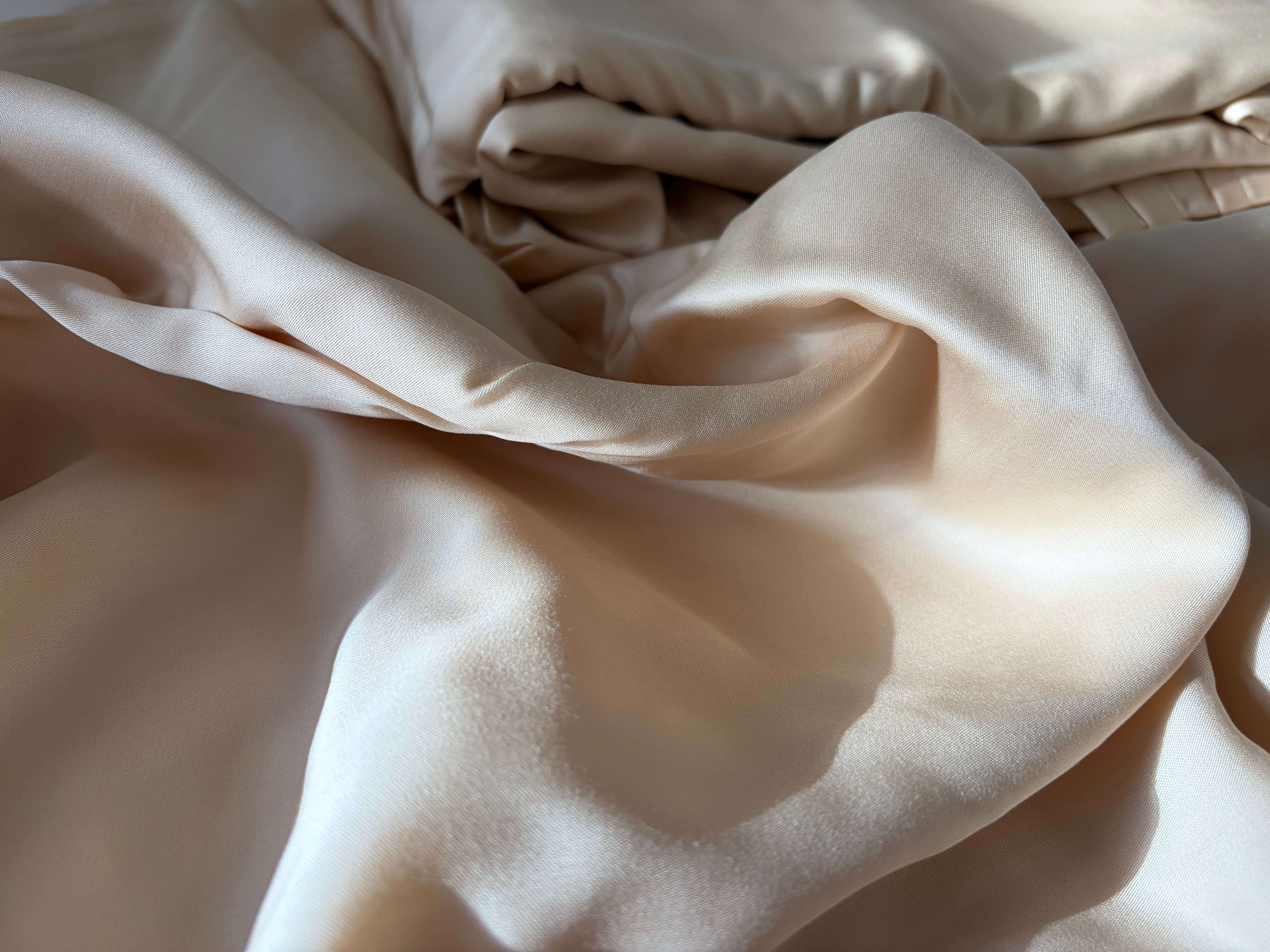
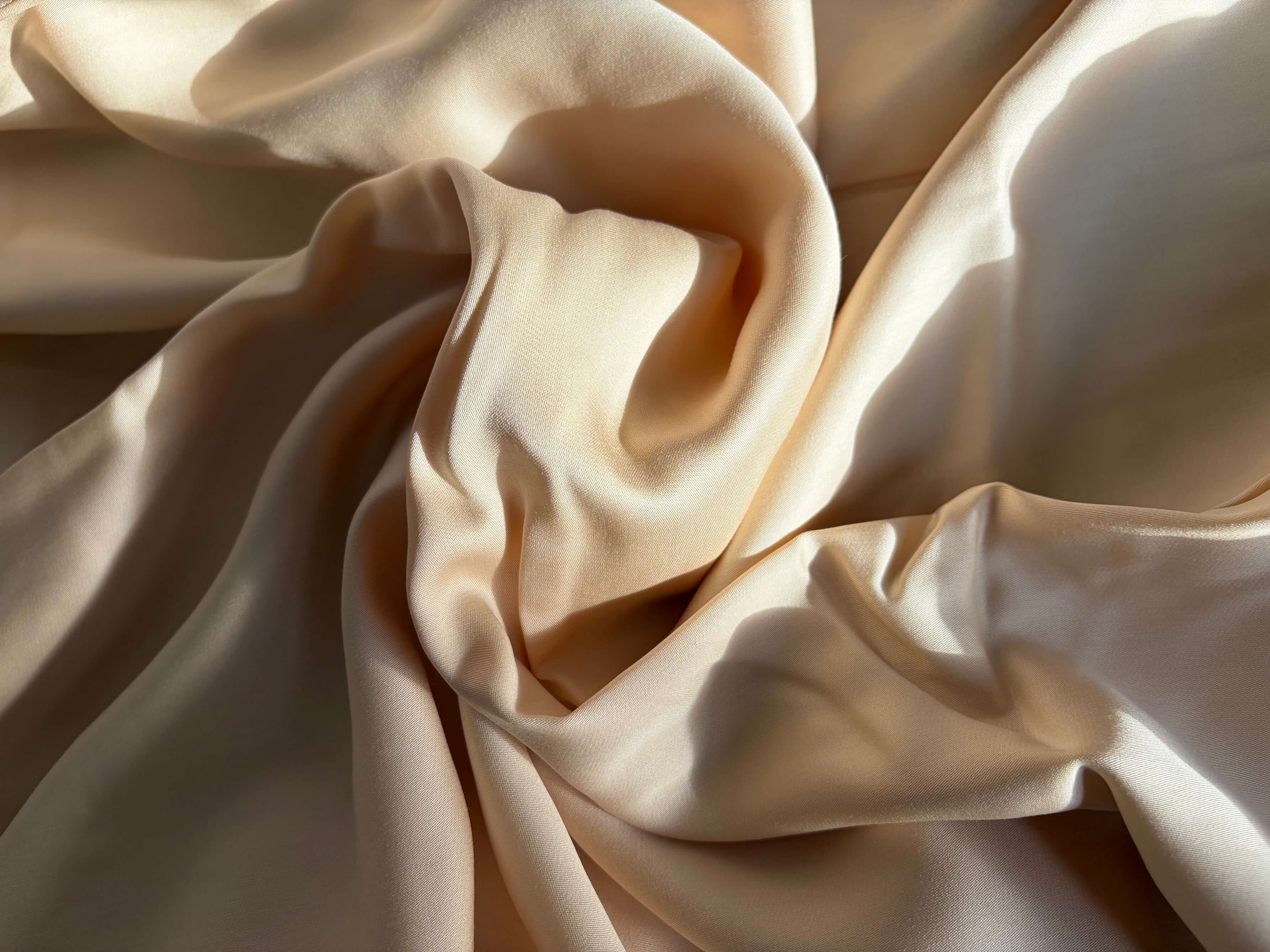
If you’re comparing Tencel vs silk, you may be wondering which fabric is softer, safer, and better for your home. Both are known for their luxurious feel and gentle texture, but they differ in sustainability, care, price, and chemical processing.
This Tencel vs silk comparison focuses on softness, sustainability, and care so you can clearly understand which fabric best fits your needs.
For a broader look at the safest materials for sleep, bedding, and your home, check out the Ultimate Guide to Non-Toxic Organic Bedding.
What Is Tencel (Lyocell Fabric)?
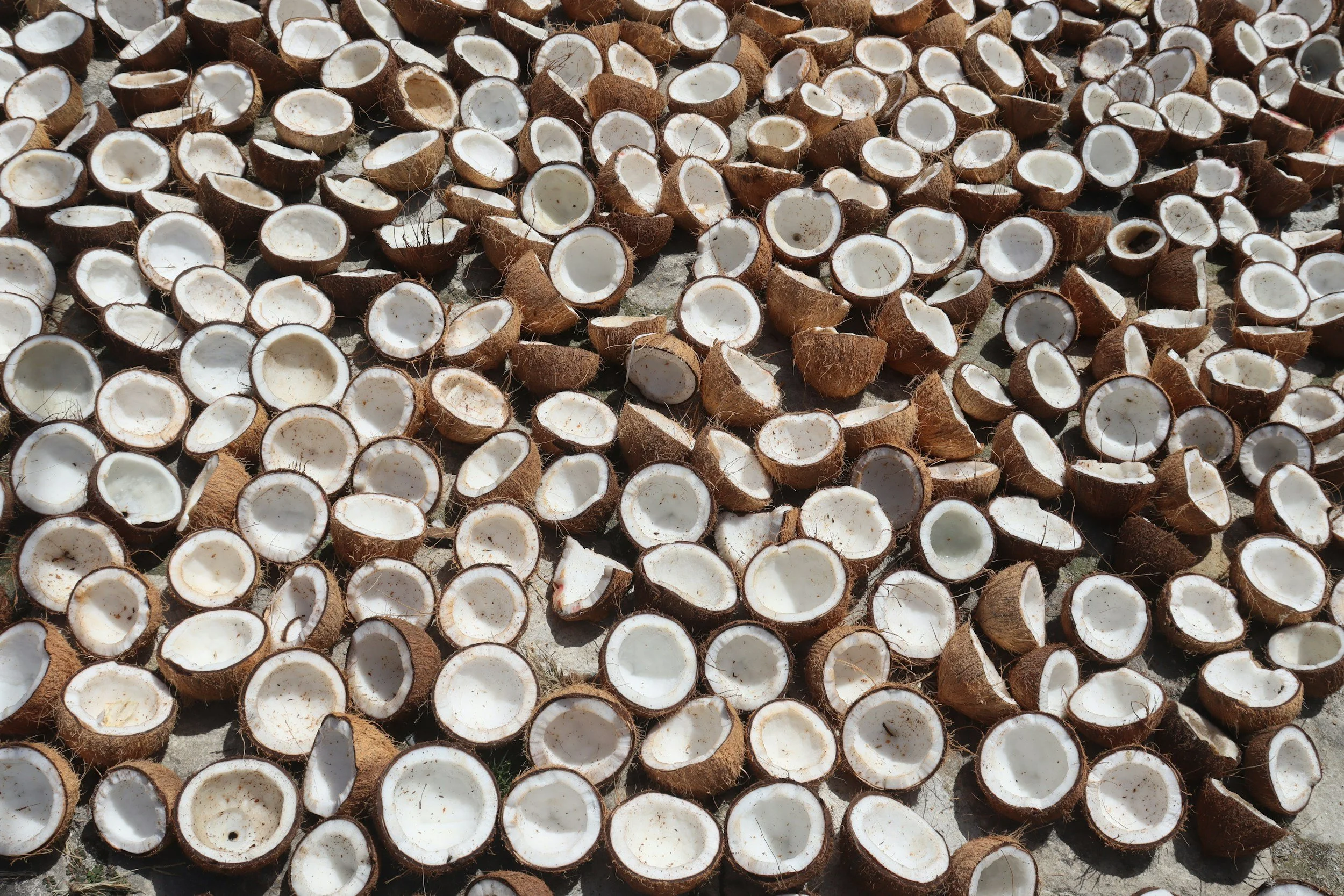
Tencel fabric is a type of lyocell, made from wood pulp, often sourced from eucalyptus trees. Thanks to a closed-loop production process, it’s eco-friendly, uses minimal water, and recycles nearly all chemicals.
Why Tencel is great:
Moisture-wicking properties – ideal for hot sleepers.
Smooth texture – gentle on sensitive skin and curly hair.
Durable & practical – easy to care for, long-lasting.
Sustainable choice – renewable resource, minimal waste, closed-loop system.
Considerations:
Production still involves chemical processing – even though it’s a closed-loop system, Tencel is not a “raw natural fiber” in its final form.
Quality depends on certification and sourcing – look for OEKO-TEX® and genuine TENCEL™ (Lenzing) to ensure safety and sustainability standards.
Can be more expensive than conventional fabrics – especially compared to basic cotton or synthetic blends.
May feel too slippery for some people – the ultra-smooth texture isn’t everyone’s preference (even though I do genuinely love how it feels).
We’ve been sleeping on TENCEL™ sheets from Nest Bedding lately, and they’re incredibly soft and breathable with that cool, silky feel. They are 100% TENCEL lyocell and FSC certified.
What Is Silk Fabric?
Silk fabric comes from silkworm cocoons, spun into silk fibers. Known as a symbol of luxury, silk is celebrated for exceptional softness and smooth texture.
Why Silk is special:
Gentle on skin & hair – perfect for silk pillowcases, silk bonnets, and silk bed sheets.
Luxurious feel – the perfect fabric for indulgent home items.
Moisture control – helps regulate body temperature, even in humid climates.
Natural fiber with amino acids – supports skin and hair health.
Considerations:
High price – premium, luxury fabric.
Less durable – often requires hand washing and avoiding direct sunlight.
Ethical concerns – traditional silk production involves silk moths.
Tencel vs Silk Comparison (Side-by-Side)
| Feature | Tencel (Lyocell) | Silk |
|---|---|---|
| Raw Material | Wood pulp (eucalyptus trees) | Silkworm cocoons |
| Processing | Closed-loop chemical processing | Degumming + dyeing treatments |
| Environmental Impact | Low water use, minimal waste | Labor- and resource-intensive |
| Skin Feel | Smooth, breathable, moisture-wicking | Luxurious, cool, ultra-smooth |
| Best For | Hot sleepers, sensitive skin | Curly hair, luxury bedding lovers |
| Certifications to Look For | OEKO-TEX®, FSC, Lenzing™ | OEKO-TEX®, GOTS (if blended) |
If you want to better understand what labels like OEKO-TEX® and GOTS actually mean when shopping for fabrics, you can read my full guide here: Certified Non-Toxic Meaning: Labels & How to Shop Safe.
Are Silk and Tencel Processed With Chemicals?
Yes—but here’s what that actually means . . .
Let’s clear something up, because this is where a lot of confusion (and greenwashing) happens.
Almost all fabrics—even natural ones—require some level of processing. The question isn’t “Are chemicals used at all?” but rather:
What chemicals are used, how are they used, how much remains in the final fabric, and how responsibly is the process managed?
Here’s how silk and Tencel compare.
Chemical Processing in Tencel (Lyocell)
Tencel fabric is made from wood pulp (often eucalyptus), which does require chemical processing to turn raw material into usable fiber.
The difference is how responsibly that process is handled.
Tencel is produced using a closed-loop production process, meaning:
Over 99% of solvents are captured and reused
Minimal chemical residue remains in the finished fabric
Very low environmental impact compared to viscose or bamboo rayon
This system dramatically reduces water consumption and waste
What to look for:
OEKO-TEX® Standard 100 → verifies the finished fabric is tested for harmful substances
FSC certification → ensures the wood pulp comes from responsibly managed forests
Transparency about sourcing from Lenzing AG, the Austrian company that produces genuine Tencel
When certified properly, Tencel is widely considered a safe, non-toxic, and sustainable choice, especially for sensitive skin and hot sleepers.
Chemical Processing in Silk
Silk is a natural fiber, but it’s not automatically non-toxic.
While the raw silk comes from silkworm cocoons, the manufacturing process often includes:
Degumming agents (to remove sericin)
Dyes and finishing treatments
Sometimes harsh chemicals to improve softness or sheen
This means silk can vary widely in safety depending on how it’s processed.
What to look for with silk:
OEKO-TEX® Standard 100 → ensures dyes and finishes are free from harmful residues
GOTS certification (rare but ideal) → covers dyeing, chemical inputs, and labor standards
Low-impact or non-toxic dyeing processes
Without certifications, even pure silk can carry chemical residues—especially in lower-cost silk pillowcases or silk sheet sets.
Certifications That Matter (Especially for Non-Toxic Fabrics)
If you’re trying to make the safest, most informed decision, these are the labels worth paying attention to:
Tests the finished fabric, not just raw fiber
Ensures products are free from harmful substances
Especially important for silk pillowcases, eye masks, and bedding that touch skin for hours
GOTS (Global Organic Textile Standard)
Applies mainly to organic cotton, but occasionally silk
Covers:
Non-toxic dyeing
Chemical restrictions
Ethical labor practices
One of the strongest certifications available
FSC Certification (for Tencel)
Ensures the wood pulp comes from responsibly managed forests
Important for confirming true sustainability
If you want a deeper dive into certifications and which ones actually mean something, I break it all down here: Certifications That Actually Matter (and the Ones That Don’t)
How to Choose Between Tencel vs Silk (Safest Option Guide)
Here’s my simple, no-stress rule of thumb:
Tencel + OEKO-TEX certification → excellent non-toxic, sustainable choice
Silk + OEKO-TEX (or GOTS, if available) → safer luxury option
Be cautious of vague terms like “natural,” “eco,” or “green” without certifications
Want to learn how brands use language to make fabrics sound cleaner than they are? Check out Greenwashing 101: How to Spot It and Avoid Being Misled
The Bottom Line
When comparing Tencel vs silk fabrics, both can be safe, luxurious, and sustainable—but certifications make the biggest difference. Tencel is often the better choice for sustainability and everyday durability, while silk offers unmatched softness and beauty benefits. If you want the safest option, look for OEKO-TEX or GOTS certified fabrics to avoid unnecessary chemical exposure.
Frequently Asked Questions
Is Tencel or silk better overall?
It depends on your priorities. Tencel is often better for sustainability, durability, and easy care, while silk is preferred for its ultra-luxurious softness and skin benefits.
Which is softer: Tencel or silk?
Silk is generally considered the softest and most luxurious, but high-quality Tencel is also extremely smooth and often feels cool and silky against the skin.
Which is more sustainable: Tencel or silk?
Tencel is typically more sustainable, thanks to its closed-loop production process and renewable wood pulp sourcing. Silk is a natural fiber, but its production is more resource-intensive.
Which is easier to care for: Tencel or silk?
Tencel is considered easier to care for and is often machine washable. Silk often requires more delicate handling, sometimes including hand washing or gentle cycles.
Final Thoughts
Choose Silk if you want luxury and indulgent softness.
Choose Tencel if you want sustainability, durability, and practicality.
Choose fabrics that are Oeko-Tex certified if you want non-toxic dyes and ethical manufacturing.
Whether you’re choosing between Tencel vs silk for bedding, clothing, or skincare, understanding certifications and processing helps you make a safer, more informed choice.
Latest on the blog